 Pin Recipe
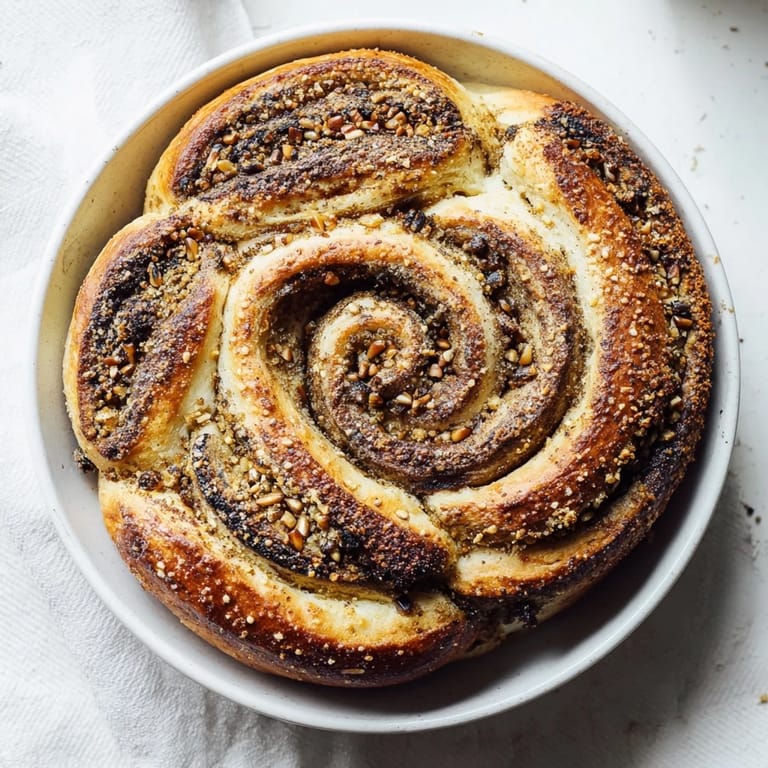
 I still remember the first time I watched a baker create a Fibonacci spiral loaf in a small artisan bakery tucked away in a quiet corner of the city. The way each layer of ingredients spiraled outward, each section denser and more textured than the last, felt like watching mathematics come alive in edible form. I was mesmerized by how something so visually intricate could emerge from simple ingredients and patience. That moment sparked an obsession that led me to my kitchen, where after many late-night experiments and flour-dusted surfaces, I finally cracked the code to creating my own Fibonacci spiral masterpiece.
I'll never forget the brunch I hosted when I first baked this bread for guests. As I sliced into that golden spiral, the warm steam rose up carrying the aroma of sun-dried tomatoes, olives, and toasted nuts. My friends gathered around the cutting board in complete silence, just staring, before one of them whispered, "Did you actually make this?" That loaf became the centerpiece of the meal, and suddenly everyone was asking for the recipe instead of complimenting my scrambled eggs.
What's for Dinner Tonight? 🤔
Stop stressing. Get 10 fast recipes that actually work on busy nights.
Free. No spam. Just easy meals.
Ingredients
- Strong bread flour (500 g): This is your foundation, and the protein content is crucial for developing the gluten network that will give your spiral structure strength and elasticity.
- Lukewarm water (350 ml): Temperature matters more than you'd think—too hot kills your starter, too cold and it wakes up sluggish. Lukewarm means it feels gently warm on your inner wrist, like a baby's bath.
- Sourdough starter or instant yeast (100 g starter or 7 g yeast): If you're going the sourdough route, use an active starter at peak rise time, when it's bubbling with confidence. Instant yeast is the reliable shortcut that works every single time.
- Fine sea salt (10 g): Salt strengthens gluten but also slows fermentation slightly, which is why we add it after the autolyse rather than at the beginning.
- Olive oil (15 ml): This adds richness and helps with the dough's extensibility, plus it creates a subtle flavor base that lets your spiral ingredients shine.
- Toasted sunflower seeds (20 g): The smallest spiral component, these seeds provide a delicate crunch and nutty flavor that starts your flavor journey gently.
- Chopped walnuts (30 g): Each segment increases in quantity and density, and walnuts add earthiness and a satisfying bite.
- Pumpkin seeds (40 g): These seeds contribute color and a slightly sweet, mineral-rich flavor that bridges the savory elements.
- Grated hard cheese (50 g): Gruyère or Parmesan adds a salty, umami depth that transforms the bread from simple to sophisticated.
- Chopped sun-dried tomatoes (60 g): Drained well, these bring a concentrated sweetness and tanginess that creates complexity.
- Mixed olives (70 g): Pitted and chopped, these add briny bursts and a reminder of Mediterranean kitchens.
- Sautéed spinach (80 g): The final and densest spiral segment, this leafy green must be well-drained or your dough becomes wet and sluggish.
Instructions
- Begin with the autolyse:
- Mix your flour and lukewarm water in a large bowl until there are no dry pockets of flour left. This resting period, which you'll cover and leave for 30 minutes, allows the flour to fully hydrate and kickstarts gluten development without any mixing. It's like letting the ingredients get to know each other before committing.
- Wake up the dough:
- After the rest, add your sourdough starter or yeast along with the salt and olive oil. Mix everything together—it will feel sticky and alive in your hands. Now comes the kneading, about 8 to 10 minutes on a lightly floured surface. You're looking for smooth, elastic dough that springs back when you poke it, almost like it's breathing.
- The long rise:
- Place your kneaded dough in an oiled bowl, cover it loosely, and let time do most of the work. At room temperature, this will take 8 to 12 hours, depending on how warm your kitchen is. You'll know it's ready when it's roughly doubled in size and jiggles gently when you shake the bowl.
- Build the spiral foundation:
- Turn your risen dough onto a lightly floured surface and divide it into 7 equal portions using a kitchen scale for precision. Each piece will become one spiral segment, and accuracy here ensures your spiral looks balanced and stunning.
- Layer by layer enrichment:
- Here's where the magic happens. Take the first portion and gently knead in your toasted sunflower seeds, working them in slowly until they're evenly distributed. Repeat this process with each subsequent portion, moving to walnuts, then pumpkin seeds, then cheese, then sun-dried tomatoes, then olives, and finally the well-drained sautéed spinach into the largest piece. You're building layers of flavor as you build the spiral structure.
- Rope and coil:
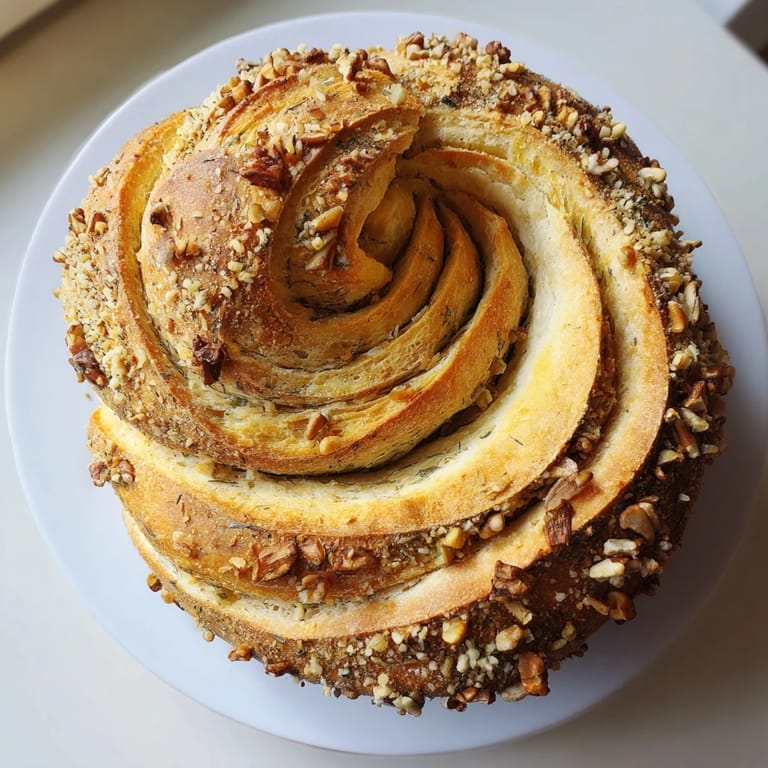
- Roll each enriched portion into a rope about as thick as your forearm. Start with your smallest rope and coil it tightly around a central point on parchment paper, then wrap each successive rope around it, building your Fibonacci spiral from the inside out. Press the final end firmly so nothing unravels during baking.
- The second rise:
- Cover your spiral loosely and let it rise for about an hour and a half until the whole thing looks puffy and alive. This rise is shorter than the first because your dough is already developed.
- Prepare your oven stage:
- Heat your oven to 230°C (445°F) and place an empty baking tray on the bottom rack. This tray will hold hot water to create steam, which gives your bread that gorgeous crispy crust and allows it to expand fully.
- The finishing touches:
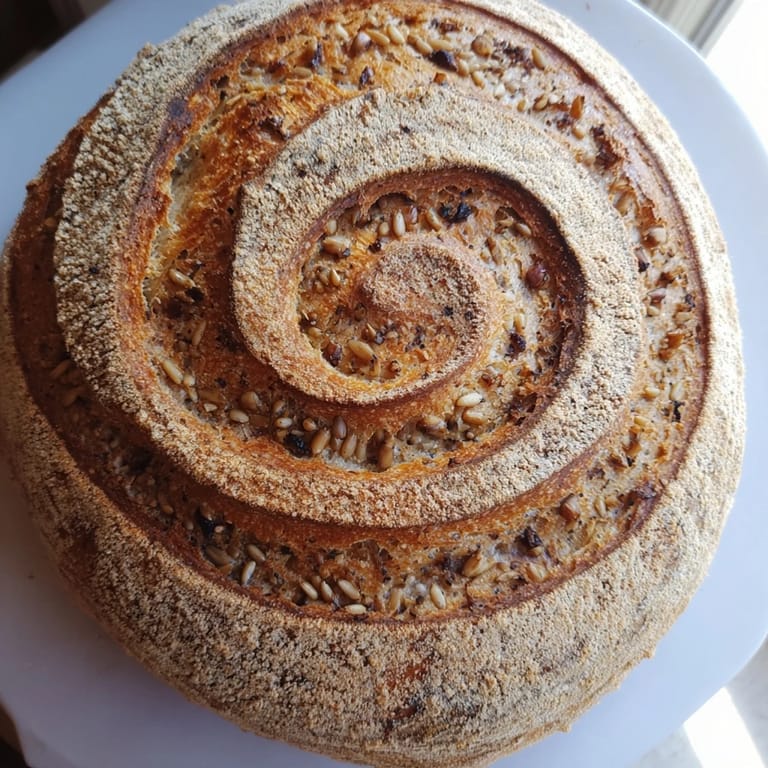
- Dust your spiral generously with flour and, using a sharp blade or lame, make confident slashes that echo the spiral pattern. This isn't just for show—the slashes guide where the bread expands and create those rustic ears.
- Steam and bake:
- Carefully pour a cup of hot water into the bottom tray to create an oven full of steam. Slide your spiral bread into the oven and bake for 40 minutes, rotating it halfway through for even browning. You're aiming for a deep golden-brown crust that sounds hollow when tapped.
- The hardest part, patience:
- Cool your finished bread completely on a wire rack before slicing. I know it's tempting to tear into it while it's warm, but this cooling period allows the crumb to set properly, preventing gumminess.
 Pin Recipe
 There's something deeply satisfying about pulling a perfectly baked spiral bread from the oven and seeing that all your patience and care has created something that's equal parts edible art and delicious sustenance. My kids still ask me to make this bread for special occasions, and each time I do, I remember why I fell in love with baking in the first place—it's the only art form where your creation becomes even more beautiful when it's destroyed and shared.
Understanding the Fibonacci Magic
The Fibonacci spiral isn't just beautiful—it's engineered for success. Each segment contains slightly more volume and density than the last, which means the flavors build as you spiral outward, much like how the golden ratio appears throughout nature. This increasing density also ensures that each spiral layer bakes evenly and doesn't dry out. When you bite into the bread, you experience a journey of flavors rather than a monotonous loaf. It's why this bread works so beautifully as a centerpiece or conversation starter.
Making This Recipe Your Own
One of the greatest gifts of this recipe is its flexibility. While I've specified exact ingredients for each spiral segment, the real joy comes when you start substituting based on what you love. Prefer seeds to nuts? Swap walnuts for sunflower seeds in another layer. Love roasted red peppers? Use those instead of sun-dried tomatoes. The progression from light to dense ingredients is what matters, not the specific items. I've experimented with everything from caramelized onions to roasted garlic, and each version tells a different story.
Storage and Serving Wisdom
This bread keeps beautifully for three days wrapped in paper on your counter, and it actually tastes better on the second day as the flavors meld and deepen. For longer storage, slice it first, then freeze in an airtight container for up to a month. When you're ready to eat it, a quick toast brings back the crispness. Serve this bread with nothing more than good olive oil and flaky sea salt, or alongside soups and cheeses that let the spiral's complexity shine through.
- Slice thickly and toast for breakfast with ricotta and honey, letting the warm bread soak up the creamy richness.
- Use the slices for an elegant open-faced sandwich where the bread's texture and flavor profile can be the star rather than just a vehicle.
- Save the end pieces for bread salads or crisping into artisanal croutons that will impress anyone who tastes them.
 Pin Recipe
 Baking this Fibonacci spiral bread is less about following a recipe and more about having a conversation with your dough, one gentle stretch and fold at a time. When you pull that golden spiral from your oven, you're not just baking bread—you're creating a moment that people will remember long after the last crumb is gone.
Recipe FAQs
- → How do the spiral segments affect the flavor?
Each segment is enriched progressively with seeds, nuts, cheese, and vegetables, creating layers of texture and complex, evolving tastes throughout the loaf.
- → What is the purpose of using steam during baking?
Steam helps develop a crisp crust by maintaining moisture inside the oven, allowing the dough to expand fully before the crust sets.
- → Can I substitute sourdough starter with yeast?
Yes, instant yeast can be used as an alternative to sourdough starter, though it may affect fermentation flavor and rise times.
- → How long should the dough rise before shaping?
The dough should double in size after an 8–12 hour rise at room temperature to ensure proper fermentation and texture.
- → Is it possible to make this loaf vegan?
By omitting or substituting the cheese with a plant-based alternative, you can create a vegan-friendly version without compromising texture.