 Pin Recipe
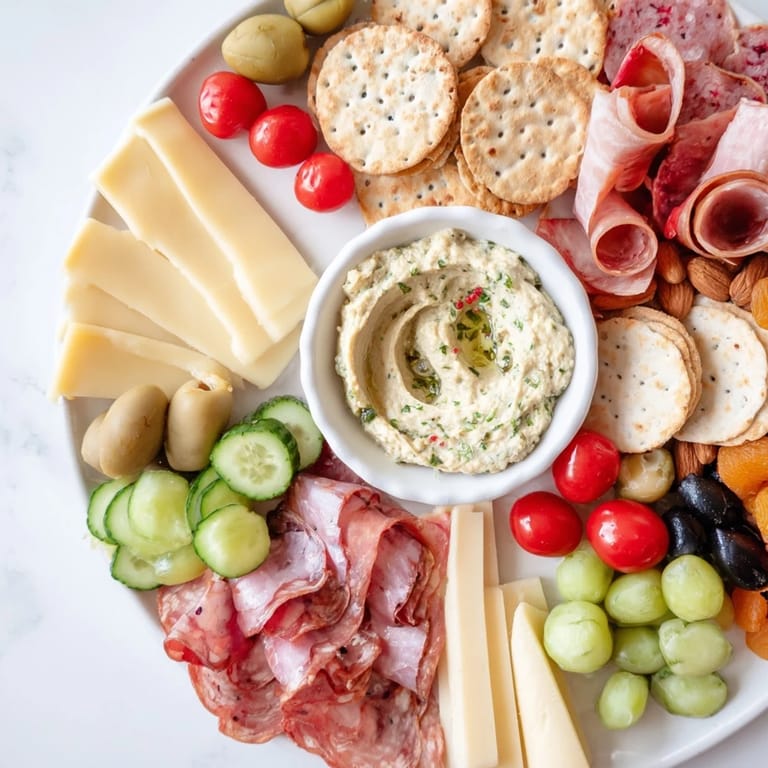
 I discovered the magic of directional boards at a dinner party where a friend arranged everything pointing toward a single dip, and I watched people's eyes light up as they immediately understood how to navigate the spread. It felt like edible choreography, and from that moment, I knew this was the kind of board that transforms a simple appetizer into a conversation starter.
The first time I made this for my book club, one member arrived early and just stood there admiring how the cheeses, meats, and vegetables all seemed to dance toward the center bowl. She said it felt intentional in a way that made her want to taste everything, and that's when I realized a beautiful arrangement could actually enhance how people experience food.
What's for Dinner Tonight? 🤔
Stop stressing. Get 10 fast recipes that actually work on busy nights.
Free. No spam. Just easy meals.
Ingredients
- Aged Cheddar (100 g, cut into triangles): The sharpness cuts through rich dips beautifully, and cutting into triangles means each piece naturally points toward your focal point
- Brie (100 g, sliced into wedges): The soft, creamy texture creates a luxurious moment on the palate, and wedges are perfect for this style of arrangement
- Gouda (100 g, cut into strips): Its subtle sweetness bridges the gap between sharp and mild, and strips follow the directional flow effortlessly
- Prosciutto (100 g, folded): The delicate, salty folds add an elegant touch and naturally angle toward your center
- Salami (100 g, sliced and folded): Another protein that's ready to eat without cooking, and folding creates visual interest
- Seedless Grapes (1 cup, cut into small clusters): They provide sweet bursts and can be arranged in loose lines pointing inward
- Cherry Tomatoes (1 cup, halved): The vibrant red color adds visual punch, and halves can be arranged in elegant rows
- Cucumber (1 small, sliced diagonally): Diagonal cuts naturally follow directional patterns, and the cool, crisp texture balances rich cheeses
- Red Bell Pepper (1 small, sliced into strips): The sweet flavor and bright color create visual direction, and strips point naturally toward your focal point
- Artisan Crackers (1 cup): Choose ones with interesting shapes that can stand on their points or angles
- Baguette (1 small, sliced on the bias): Slicing on the bias creates natural angles that reinforce your directional theme
- Marcona Almonds (½ cup): These buttery, delicate nuts fill gaps and add textural contrast
- Dried Apricots (¼ cup): Their sweet-tart flavor and golden color create visual interest between components
- Olives (¼ cup): They nestle into empty spaces and guide the eye along your directional lines
- Herbed Hummus or Whipped Feta Dip (100 ml): This is your magnetic center, so choose a dip you genuinely love
Instructions
- Set Your Focal Point:
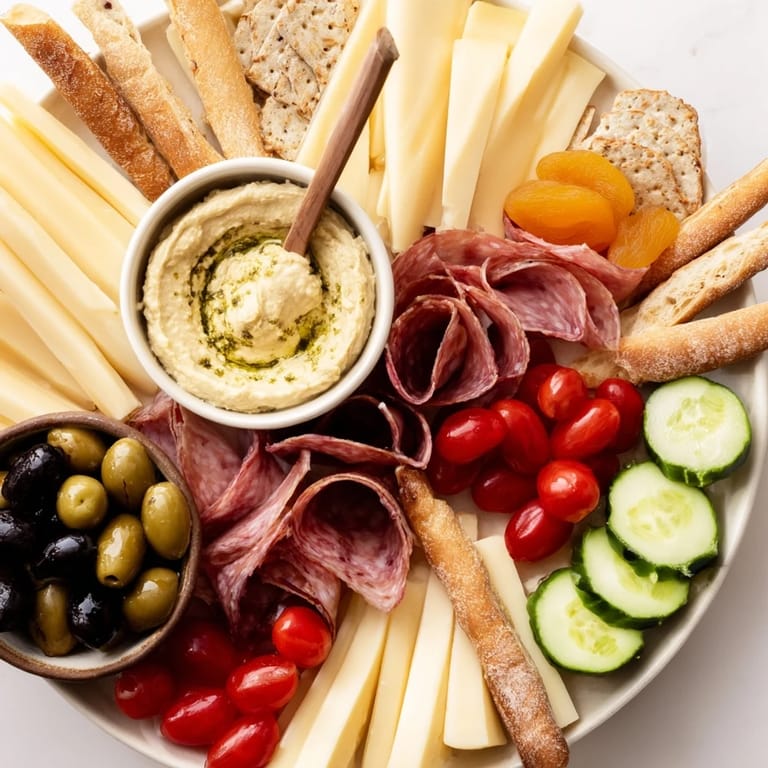
- Place your dip bowl at one corner or end of your board, in a small bowl so it sits securely. This is your arrow's tip, the place where every element will lead the eye. Step back and imagine all the lines of food flowing toward it like rivers meeting the sea.
- Create the Cheese Foundation:
- Start with your cheese pieces, arranging the triangles and wedges in a fanning pattern that radiates from the opposite side of the board toward your dip. Vary the heights slightly by propping some pieces against others, creating depth and movement. The angles should feel intentional, like they're all leaning in toward something delicious.
- Layer in the Meats:
- If you're including prosciutto and salami, fold them gently and arrange them in lines that echo your cheese pattern. These softer, more delicate pieces should sit loosely, with folds facing slightly toward your dip bowl. They add elegance and create natural breaks in your color palette.
- Guide with Vegetables:
- Arrange your prepared vegetables in angled rows, paying attention to how their edges and shapes can emphasize movement toward the center. The diagonal cucumber slices, pepper strips, and tomato halves should feel like signposts all pointing the same direction. This is where color coordination matters most.
- Position Crackers and Bread:
- Place crackers and baguette slices in radiating lines, almost like spokes on a wheel with the dip bowl as the hub. Some crackers can stand at angles, others can lay flat, but their orientation should always reinforce the directional theme. Toast the baguette lightly if you like a sturdier cracker.
- Scatter the Finishing Elements:
- Fill remaining gaps with almonds, dried apricots, and olives, strategizing where they can reinforce your directional pattern. These smaller elements become visual connectors, guiding the eye in the same direction. Step back frequently to assess balance and color distribution.
- Final Adjustments:
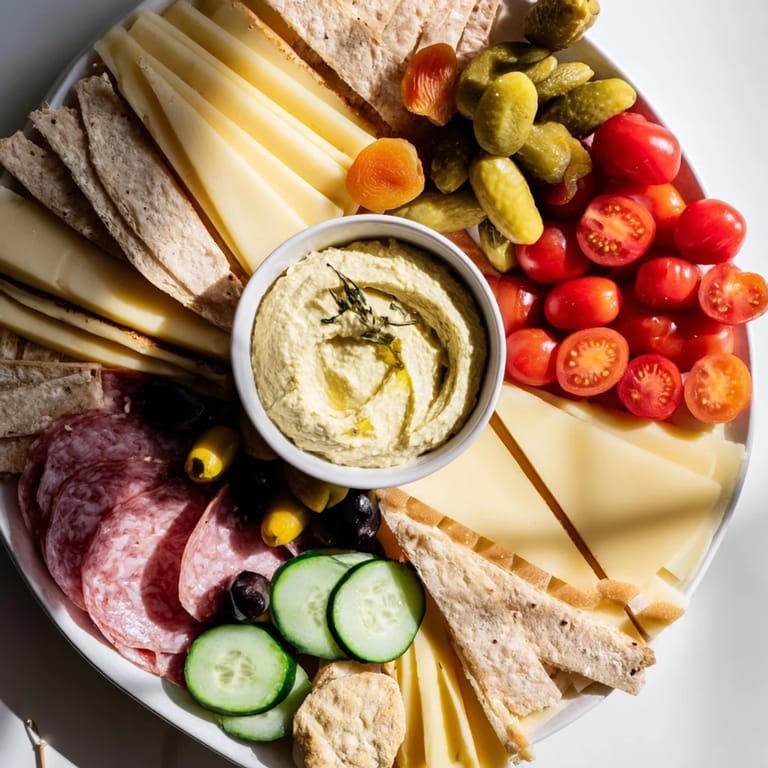
- Look at your board from your guests' perspective, ideally from standing height where they'll view it. Adjust any pieces that break the visual flow, fill any awkward gaps, and ensure the dip bowl sits at the natural destination of all your arranged elements. The goal is to make the path feel inevitable.
 Pin Recipe
 Last summer, a guest asked if the board was intentionally pointing them toward the hummus or if she was imagining things, and the whole table laughed before realizing they'd all unconsciously picked up pieces that pointed toward the dip. That's when I understood that good design doesn't just look beautiful, it actually influences how people experience food.
Board Selection and Setup
The foundation of this arrangement is a board with enough real estate to let your directional pattern breathe. A wooden board at least 14 inches by 10 inches gives you room to create actual flow without everything feeling cramped. Slate boards photograph beautifully and provide nice color contrast, while natural wood feels warm and organic. Whatever you choose, make sure it's sturdy enough that you're comfortable moving it, because you'll want to adjust it right up until guests arrive. Some people even mark the center point lightly with a toothpick first to guide their arrangement, then remove it before serving.
Color and Texture Strategy
The directional arrow works visually because your eye naturally follows color and contrast. Position your brightest elements (red peppers, cherry tomatoes, grapes) in deliberate lines that echo your directional theme, while the neutral whites and golds of cheeses and crackers create sophisticated connectors between the vivid pieces. Think about how the eye moves across the board, almost like you're composing a painting where every element has purpose.
Customization and Beverage Pairing
This board is endlessly adaptable to what you love and what your guests can eat. Vegetarian versions become even more visually striking with extra cheeses, roasted vegetables, or marinated artichoke hearts creating the directional flow. For wine pairing, a crisp Sauvignon Blanc echoes the fresh vegetable notes, while a light Pinot Noir complements the richer cheeses and meats. If you want to switch dips, beet hummus creates dramatic color, tzatziki brings cooling herbaceousness, or whipped ricotta offers creamy indulgence.
- Make sure all elements are cut and ready at least 30 minutes before guests arrive, so you can focus on final arrangement and presentation
- If preparing hours ahead, cover loosely with plastic wrap and keep in the cooler until 15 minutes before serving, allowing everything to reach a pleasant temperature
- Consider your guests' dietary needs when selecting meats, cheeses, and dips, and always clearly label anything that contains common allergens
 Pin Recipe
 There's something deeply satisfying about creating a board that's both beautiful and purposeful, where every element serves both aesthetics and appetite. Your guests will taste the care in your arrangement as much as the flavors themselves.
Recipe FAQs
- → How can I create the arrowhead effect on the board?
Arrange cheeses, meats, vegetables, and crackers so their shapes and edges point toward the dip bowl, placing it at one end or corner to serve as the focal point.
- → What are good vegetarian alternatives for this board?
Omit the meats and replace them with additional cheese varieties or extra fresh produce for color and texture variety.
- → Which dips complement the flavor profile best?
Herbed hummus or whipped feta provide creamy, tangy contrasts; beet hummus or tzatziki also work well for added flavor complexity.
- → How do I maintain balance and flow on the board?
Scatter nuts, dried fruits, and olives between main components and adjust spacing to avoid gaps, keeping all items angled toward the dip bowl for cohesion.
- → What tools help with prepping this setup?
Use a large wooden or slate board, a paring knife for precise cuts, and small bowls to hold dips and olives neatly.