 Pin Recipe
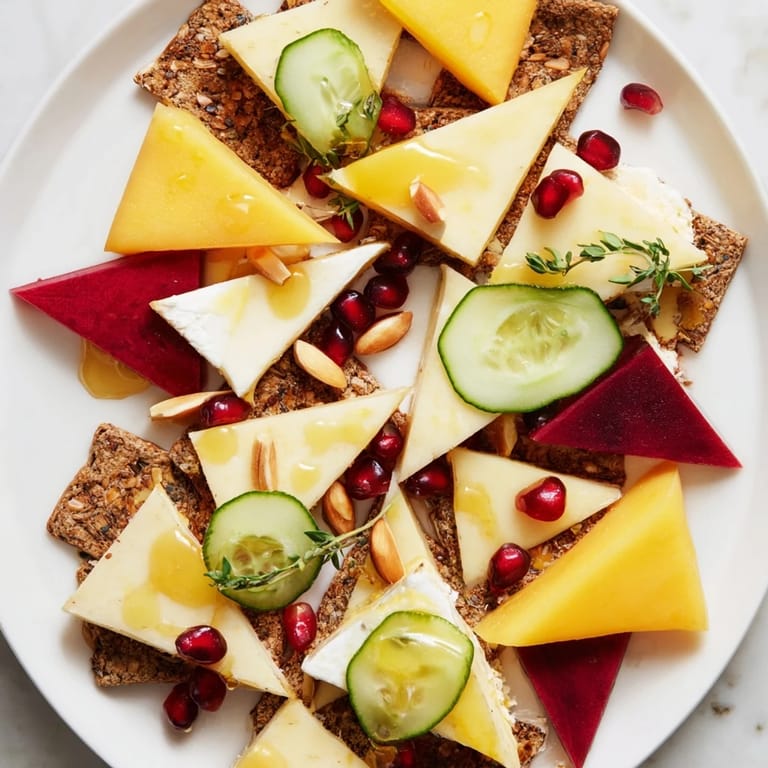
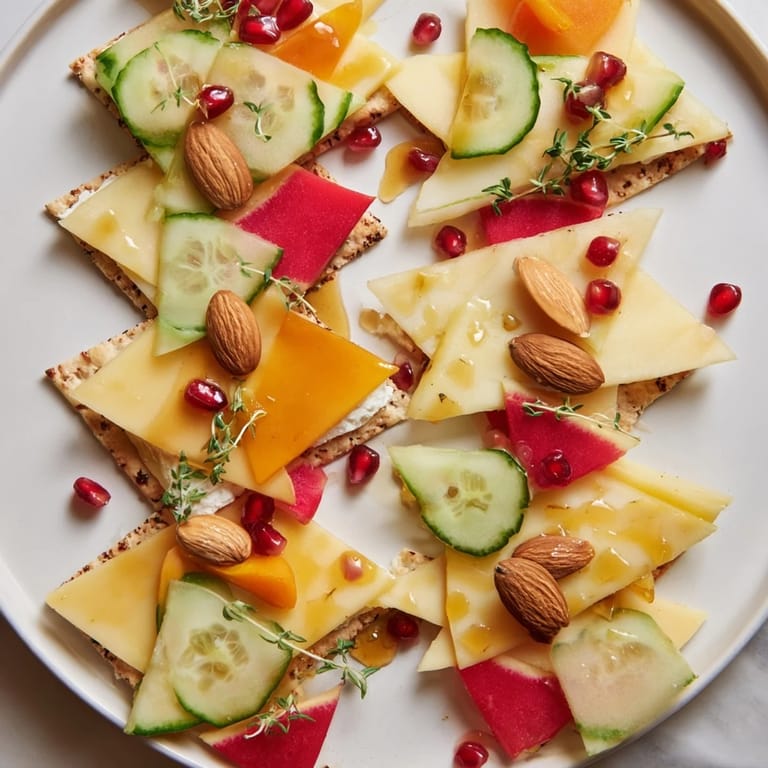
 I'll never forget the moment I decided to stop serving food like everyone else and started serving it like art. It was at a dinner party where a friend brought a charcuterie board so meticulously arranged that people actually paused before eating it. That's when it clicked for me: food could be a conversation starter, a moment of wonder before the first bite. The Tessellation Triangle came to life that night in my kitchen, born from the simple idea that if I could make an appetizer board so visually stunning that guests felt almost guilty disrupting it, I'd have created something truly memorable. Three hours of cutting and arranging later, I had my masterpiece—and it became the dish I'm asked to bring to every gathering.
I remember my sister-in-law watching me arrange the final pieces, her eyes getting wider with each triangle I nestled into place. When I stepped back and revealed the full board, she grabbed her phone before even tasting anything. That's when I knew this wasn't just an appetizer—it was edible architecture, and it had the power to make people feel special before they ever took a bite. Watching guests carefully extract their first triangle without disturbing the pattern has become my favorite part of serving this dish.
What's for Dinner Tonight? 🤔
Stop stressing. Get 10 fast recipes that actually work on busy nights.
Free. No spam. Just easy meals.
Ingredients
- Aged cheddar (100g): The backbone of your board—sharp, assertive, and golden orange for visual pop. Slice it thin enough to drape slightly when you fold it, thick enough to hold its shape. The age matters here; younger cheddars taste flat against all these bright flavors
- Manchego (100g): Spain's gift to cheese boards. It has this subtle nuttiness that plays beautifully with fruit. The pale yellow triangles fill the spaces between brighter elements and add an earthy sophistication
- Goat cheese (100g): The creamy rebel. Keep it cold before cutting—warm goat cheese crumbles like it's angry with you. Chilled, it slices clean and offers tangy pockets of luxury that balance the sweet pear perfectly
- Cucumber (1 medium): Peel it so the flesh is bright white and fresh-looking. These triangles act as your neutral canvas, crisp and refreshing between the rich cheeses and sweet fruits. Cut them the absolute last minute or they'll weep and become soft
- Red bell pepper (1 large): The jewel of the arrangement. Remove every seed, then slice with intention—these triangles should be thin enough to catch light and thick enough not to tear. The natural sweetness whispers without shouting
- Cooked beet (1 small): This is your secret weapon for achieving a seamless pattern. Those deep crimson triangles tie the entire board together visually. Roast or boil it ahead of time, chill it completely, then slice it paper-thin with a mandoline if you have one
- Pear (1 large): Choose one that's just barely ripe—still firm, still with a slight tartness. Core it carefully, then slice immediately and toss with lemon juice to prevent browning. The subtle sweetness and delicate texture create that moment of surprise in every handful
- Seedless watermelon (1/2 cup): Cut the smallest, most perfect triangles you can manage. They're mostly water and playfulness—a moment of cooling refreshment between the richer elements
- Whole grain crackers (100g): These anchor everything. They provide structure and that satisfying crunch. Cut larger ones into triangles, leave smaller ones whole. The grain pattern actually adds to your tessellation if you position them thoughtfully
- Roasted almonds (1/4 cup): Your tiny flavor punctuation marks. They fill gaps and add that essential crunch and earthiness. I roughly chop some and leave others whole—it creates visual interest
- Pomegranate seeds (1/4 cup): The glitter of appetizer boards. They're not there just for show; those little jewels add bursts of tart-sweet juice that cleanse your palate. Save them for the very end to fill the inevitable tiny gaps
- Honey (2 tbsp, optional): A delicate drizzle over the goat cheese triangles creates caramelized edges and adds a touch of sophistication. It's optional, but I've never once regretted adding it
- Fresh herbs (thyme or mint): The final garnish that transforms technique into artistry. Thyme adds an earthy whisper; mint brings brightness. Scatter them just before serving so they stay fresh and fragrant
Instructions
- Start with your canvas:
- Clear your largest wooden board or platter and stand back. This is your stage, and you're about to turn it into geometry. Make sure it's completely clean and dry—water spots are the enemy of presentation
- Become a surgeon of slicing:
- This step separates the beautiful from the mediocre. Sharp knife or mandoline in hand, cut every single ingredient into triangles as uniform as possible. I'm talking about the same size, the same thickness. Lay each triangle on a separate small plate as you go—this is meditation work, and rushing it shows. Trust me on this. Your beet slices should be nearly transparent; your cheese triangles should be about a quarter-inch thick; your crackers should be small enough to nestle between everything else without dominating
- Plan your pattern before you place:
- This is the part people skip, and it's the part that separates amateurs from artists. Lay out your ingredients on separate boards or plates in groups. Look at your main platter. Mentally divide it into quadrants. Decide: do you want the pattern to radiate from the center? Do you want it to flow in diagonal lines? Do you want warm colors on one side and cool on the other? I usually start from the top corner and work toward the center, letting the colors guide me naturally
- Begin the tessellation dance:
- Pick a corner and start placing triangles. Cheese, vegetable, fruit, cracker—alternate textures and colors, fitting each piece snugly against its neighbors like puzzle pieces. This takes patience, not speed. Press gently as you go; you're creating pressure bonds between the pieces. The goal is to leave almost no white space showing on the board itself. Every gap matters. Work in small sections, step back frequently to see the overall pattern emerging
- Continue with intention:
- Keep going around the board, staying true to your color and texture distribution. If one side is getting too cheese-heavy, add more vegetables to the opposite side. If you've got too many cool colors, balance with warm. This is where taste and aesthetics merge—you're not just filling a board, you're creating harmony
- Fill the impossible spaces:
- You will reach a point where tiny gaps remain. This is where pomegranate seeds and almonds become your best friends. Scatter them strategically, filling voids while adding pops of color and texture. These little moments of asymmetry are what make the whole thing feel alive and not robotic
- Add the finishing touches:
- If you're using honey, drizzle it very lightly across the goat cheese triangles with a thin spoon. Less is more—you want a whisper of sweetness, not a flood. Scatter your fresh herbs across the entire board in a seemingly random but actually quite deliberate way. A pinch here, a sprig there
- The moment of truth:
- Step back. Take a photo if you want. Admire your work. Then serve immediately while everything is fresh and crisp and hasn't started to settle or wilt. The sooner it gets to your guests, the more impact it has
 Pin Recipe
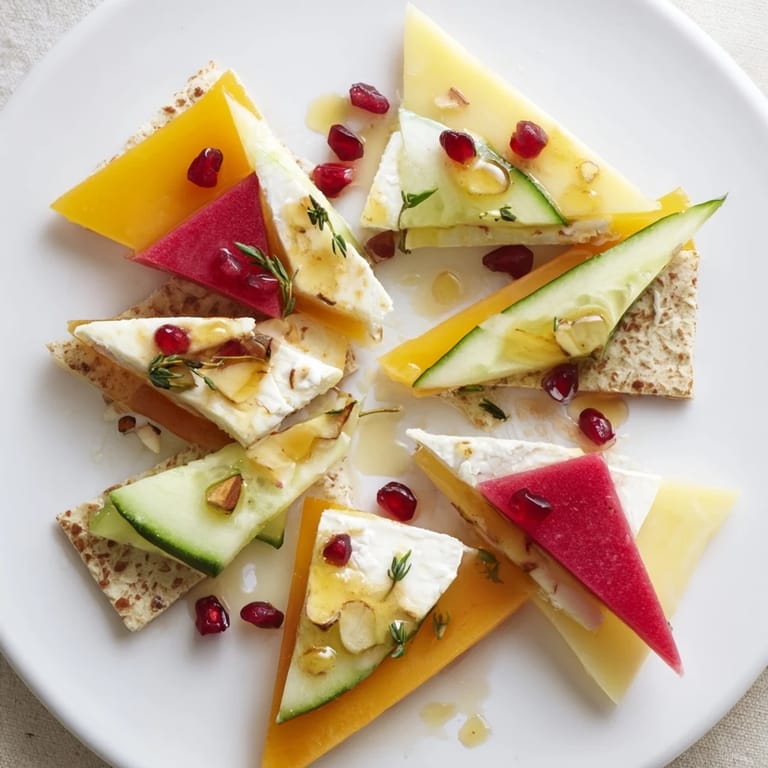
 The most beautiful moment with this dish happened when my neighbor brought her two kids over, and I watched their eyes go wide when they saw the board. They didn't want to eat it—they wanted to draw it. One of them spent ten minutes recreating the pattern on paper, and I realized then that this appetizer had transcended being food. It had become something that sparked joy, creativity, and conversation. That's when a recipe stops being just instructions and becomes a memory in the making.
The Geometry of Flavor
Every triangle you place tells a story—the earthy depth of aged cheddar next to the bright snap of a cucumber slice, the creamy surprise of goat cheese meeting the crunch of almonds. The genius of triangular pieces is that they're not just visually stunning; they force you to think about proportion and balance in every bite. A wedge of pear against a salty cracker against a cool bell pepper creates flavor conversations that rectangular slices never achieve. When you tessellate ingredients this way, you're not just arranging food; you're composing a symphony where every element gets its moment to shine.
Adapting Your Tessellation
This board is a canvas, and you are the artist. Don't have Manchego? Use aged Gouda or a sharp Gruyère instead. Can't find watermelon? Slice some apple or add candied orange peel for that sweet-tart note. The rules aren't rigid—they're more like suggestions whispered by someone who's made this mistake already so you don't have to. For a vegan version, swap the cheeses for high-quality plant-based alternatives and you've got something equally stunning. For a non-vegetarian twist, add prosciutto or salami triangles scattered throughout, their salty richness deepening the entire experience. The pattern remains, only the ingredients evolve.
Creating Your Personal Style
Here's the secret that separates a pretty appetizer from one that haunts your guests' memories: make it yours. Maybe you're drawn to warm colors and create an ombre effect from red to orange to pale yellow. Maybe you prefer cool tones and let purples and greens dominate. Maybe you create sections where each ingredient gets its own geometric space before bleeding into the next. These choices aren't mistakes; they're signatures. I've made this board at least fifty times now, and no two are identical because I listen to what the ingredients want to say that day. Your guests will taste not just the flavors but also the intention and personality you've woven into every placement.
- Trust your eye more than any rule—if it looks beautiful to you, it probably is beautiful to everyone
- Remember that the board doesn't need to be perfectly symmetrical to be perfectly balanced—asymmetry often feels more alive and honest
- Take a photo before anyone touches it, not for social media, but because you made something worth remembering
 Pin Recipe
 Every time I make this board, I'm reminded that the best recipes are the ones that do double duty—they nourish the body and feed the soul. This one does both, in the most elegant way possible. Serve it and watch what happens.
Recipe FAQs
- → What techniques help create uniform triangles?
Using a sharp chef's knife or mandoline slicer ensures thin, even triangles that tessellate neatly without gaps.
- → Can this be adapted for vegan guests?
Yes, by substituting plant-based cheeses and ensuring all accompaniments are vegan-friendly, the board suits vegan preferences.
- → How can I enhance flavor without cooking?
Drizzling honey on goat cheese triangles and garnishing with fresh herbs like thyme or mint adds depth and freshness.
- → What wines pair well with this board?
Crisp white wines like Sauvignon Blanc complement the bold, fresh flavors and variety of textures on the board.
- → How should the board be assembled for best visual impact?
Start arranging triangle pieces from one corner, alternating colors and textures closely to form the interlocking tessellated pattern.