 Pin Recipe
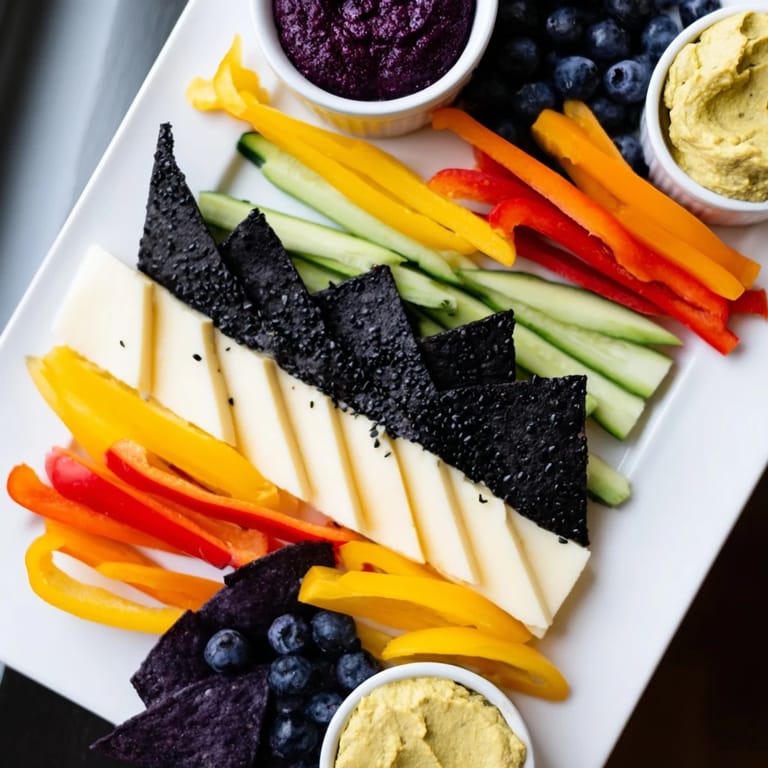
 I'll never forget the moment a friend brought a zigzag platter to my dinner party—it was like lightning had struck right in the middle of my table. The angular arrangement of colors was so bold and unexpected that guests actually gasped before diving in. That night, I realized that food doesn't just taste good; it needs to speak to us visually first, and this platter does exactly that.
I made this for a gallery opening once, and watching people admire the platter as though it belonged on the wall itself was magic. Someone actually asked if it was part of the art installation. That's when I knew this arrangement transcended being just appetizers—it was an experience.
What's for Dinner Tonight? 🤔
Stop stressing. Get 10 fast recipes that actually work on busy nights.
Free. No spam. Just easy meals.
Ingredients
- Red bell pepper strips: These are your first jolt of color and natural sweetness. I've learned to cut them into long, dramatic pieces rather than chunks—the length emphasizes the lightning bolt design.
- Yellow bell pepper strips: The warm companion to red, creating a color harmony that feels intentional. Cut them the same length for visual consistency.
- Cucumber sticks: Your crisp, refreshing element that makes people feel virtuous while snacking. Cut them thick enough to feel substantial but thin enough to fit the angular aesthetic.
- Purple carrots: This is where the magic happens. Most people reach for orange carrots, but purple ones elevate everything. They're slightly earthier and create stunning contrast against lighter ingredients.
- Sharp white cheddar: Slice it thin and cut at angles—these sharp geometric shapes reinforce the lightning theme while delivering that aged, complex flavor.
- Black wax gouda: Dark and sophisticated, this cheese adds drama. The contrast between white and black cheddar is essential to the visual impact.
- Blueberries: Scatter these like little jewels. They're tart enough to cut through cheese richness and add unexpected bursts of flavor.
- Golden cherry tomatoes: Halved to show their gorgeous interior, these add sweetness and visual warmth. The gold tone bridges your warm and cool colors.
- Beet hummus: Deep red and earthy, this dip anchors one end of your zigzag. I learned the hard way that beet hummus needs room to breathe on the board—don't skimp on the bowl size.
- Classic hummus: Creamy and grounding, it provides a neutral anchor point. Use a good quality one; it shows.
- Blue corn tortilla chips: These aren't just vehicles for dip—they're color statement pieces. The deep blue is crucial to the modern aesthetic.
- Black sesame rice crackers: Delicate and sophisticated, they add sophistication and reinforce those bold dark tones.
Instructions
- Prepare with intention:
- Wash everything thoroughly and pat dry—moisture is the enemy of crispness. As you peel and cut, think about length and angle. Each vegetable should be cut long enough to contribute to that diagonal flow. A sharp chef's knife makes this feel effortless rather than like a chore.
- Establish your zigzag foundation:
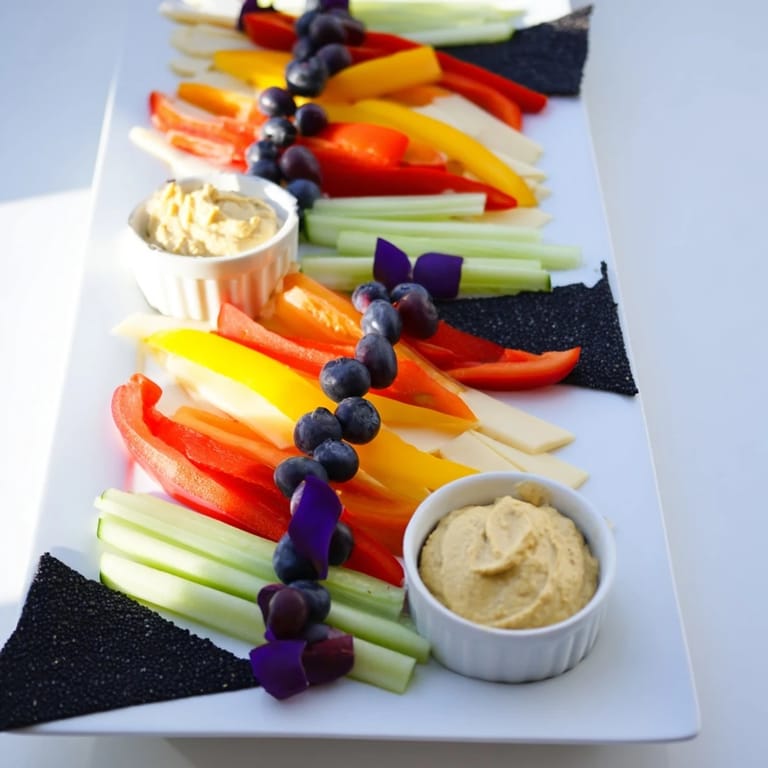
- Start at one corner of your rectangular board and imagine a lightning bolt striking diagonally to the opposite corner. This is your guide. Begin placing your first color—I usually start with red peppers—in a thin line following that diagonal path. Let yourself feel the geometry as you work.
- Build the contrast:
- Immediately next to your red pepper line, place white cheddar slices. The contrast should be striking. Then comes yellow pepper, then black gouda. You're creating a rhythm: warm, light, warm, dark. Keep alternating. This is where the platter transforms from ingredients to composition.
- Weave in the supporting players:
- Now introduce cucumber, purple carrots, and blueberries into the spaces and alongside your main zigzag. Don't overthink placement—let the colors guide you. If something feels visually heavy on one side, balance it with a pop of color on the other.
- Position your dips strategically:
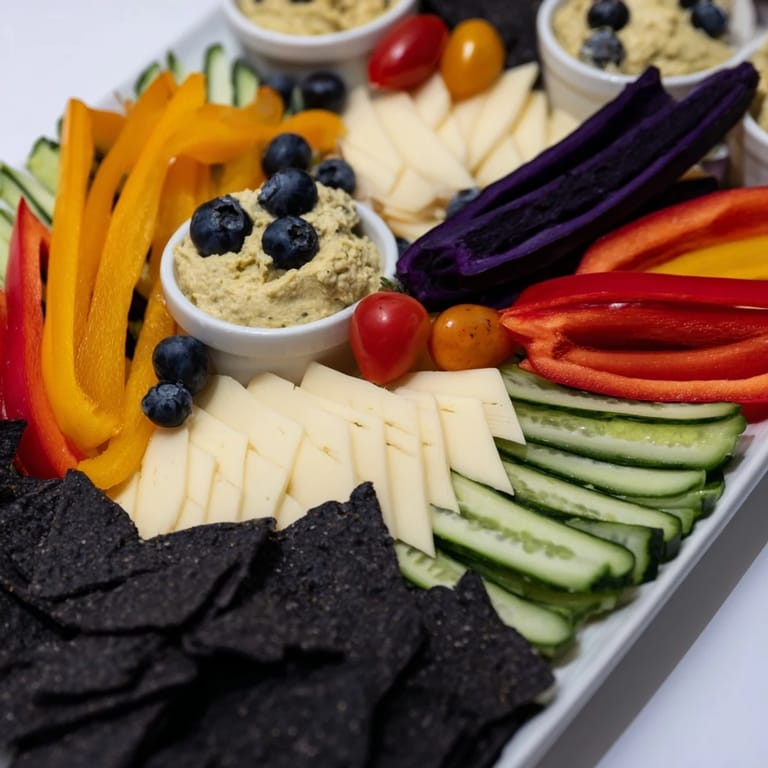
- Place small bowls of beet hummus and classic hummus at natural junction points of your zigzag—where the line would naturally want to turn or pause. These become both functional and decorative anchors.
- Frame with crunch:
- Tuck your tortilla chips and rice crackers along the outer edges, following the angle of your zigzag. Let them peek out like a decorative border that promises texture. This is the finishing touch that makes it feel intentional.
- Add the final flourish:
- Scatter halved cherry tomatoes along the entire length of your creation, bringing warmth and light throughout. These golden halves are your final visual punctuation.
- Serve with confidence:
- Step back and admire what you've created. Serve immediately while everything is at peak crispness and colors are vivid. The moment you bring it to the table is when the real magic happens.
 Pin Recipe
 The first time I served this, someone told me it was too pretty to eat. But then they took a bite, and their face changed—the flavors were just as thoughtful as the presentation. That's the real lesson: beauty and substance working together, neither one without the other.
The Power of Color Theory on a Platter
When I studied this platter more carefully, I realized I wasn't just arranging food—I was arranging emotions. Red and yellow create warmth and energy. Purple and blue create sophistication and calm. White and black provide structure and drama. Every vegetable choice was a color choice, and every color choice was a mood choice. This is why the zigzag works so well; it forces you to think about how colors interact, creating visual rhythm that makes people slow down and truly see what they're eating.
Making It Your Own
The beauty of this arrangement is that it's a template, not a mandate. Once you understand the principle—bold contrasts, angular lines, alternating colors—you can play with it based on what's in season or what speaks to you. I've made winter versions with roasted vegetables and spring versions loaded with fresh herbs tucked between the lines. The structure stays the same; the personality shifts with your choices.
A Board That Tells Your Story
This isn't just a platter; it's an extension of your kitchen philosophy. It says you care about the small details, that you think about how food looks as much as how it tastes, and that entertaining doesn't have to mean stress. Every time I make this, I remember that food is one of the few ways we can give people simultaneous gifts of beauty, health, and pleasure.
- Prep vegetables the morning of, store in airtight containers, and assemble just before guests arrive for maximum crispness
- If you're making a vegan version, plant-based cheeses benefit from a few minutes in the freezer before slicing for cleaner edges
- The dips can be made a day ahead; the crackers and chips stay fresher if added to the board just before serving
 Pin Recipe
 This platter taught me that sometimes the most memorable meals aren't elaborate or complicated—they're the ones made with intention and served with joy. May your zigzag strike as boldly on your table as it did on mine.
Recipe FAQs
- → How do I create sharp angular cuts for the vegetables?
Use a sharp chef's knife to cut bell peppers, carrots, and cucumbers into long, thin strips with clean edges to emphasize the angular design.
- → What cheeses work well for this style?
Sharp white cheddar and black wax gouda complement the bold shapes and provide contrasting flavors and colors.
- → Can I make this suitable for gluten-free diets?
Yes, by selecting gluten-free crackers and chips, you can maintain the dish’s texture without compromising dietary needs.
- → How should the dips be arranged for best effect?
Place beet and classic hummus dips in small bowls at key junction points along the zig-zag to enhance both flavor access and visual drama.
- → What beverages pair well with this platter?
Crisp white wines like Sauvignon Blanc or sparkling water with lemon offer refreshing balance to the bold flavors and textures.